What Is Plaque and How Can You Keep It Under Control?
When most of us think about plaque, we picture the annoying yellowish coating on teeth that ruins our perfect smiles. But plaque is more than just an aesthetic issue. The sticky film of bacteria constantly forms on the teeth, haunting your smile. Walnut Creek Dental explains plaque, its causes, and its impact on maintaining a healthy mouth. Contact us today to learn more.
What Causes Plaque Formation?
Plaque forms due to the interaction between bacteria in the mouth and food particles, particularly sugary and starchy foods. When these substances linger on your teeth, oral bacteria consume them and produce acids. These acids combine with saliva and food debris to form the sticky film known as plaque. Without regular brushing and flossing, plaque builds up over time, turning into hardened tartar, which is even more challenging to remove.
Sugary snacks, breads, pasta, and other carbohydrate-heavy foods contribute most to plaque formation. Poor oral hygiene, dry mouth, smoking, and certain medical conditions can further accelerate plaque development, creating an ideal environment for bacteria to thrive.
What Happens If Plaque Is Left Untreated?
While plaque itself might not seem like a serious threat, neglecting it can lead to a cascade of dental health issues. Plaque buildup can result in cavities, as the acids it produces erode tooth enamel and create small holes in the teeth. Over time, this can also progress to gum disease, characterized by red, swollen, and bleeding gums, and potentially leading to periodontitis, where gums pull away from the teeth and bone loss may occur.
Additionally, untreated plaque can contribute to bad breath, tooth discoloration, and even tooth loss in severe cases. Beyond oral health, research suggests that poor plaque management is linked to systemic conditions such as heart disease, diabetes, and respiratory infections.
Identifying Plaque and Tartar
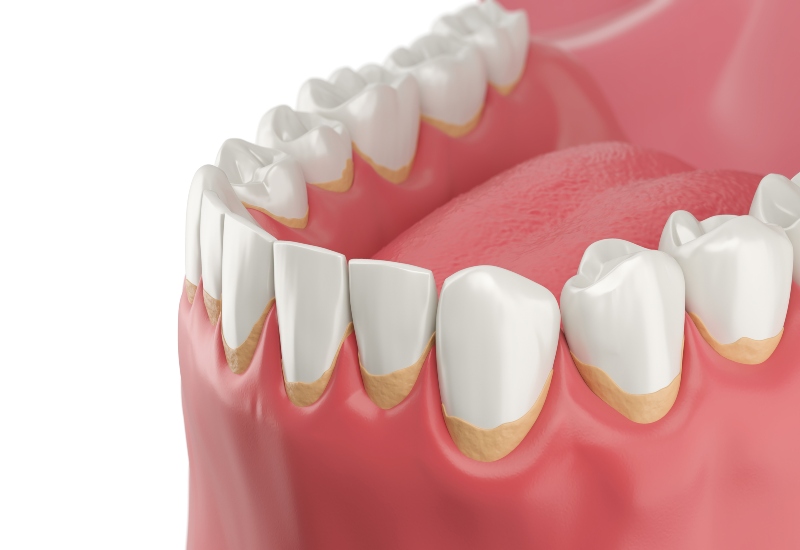
Plaque is often invisible, especially in its initial stages, but it may feel like a slimy or fuzzy coating on teeth when you run your tongue across them. Over time, it may take on a yellowish or whitish appearance, particularly along the gumline or in areas that are harder to clean.
Tartar, on the other hand, is hardened plaque that can only be removed by a dentist or dental hygienist. It often appears as yellow, brown, or dark deposits on teeth, giving the smile a stained appearance. If you notice any of these signs, it’s essential to act quickly before the situation worsens.
How to Remove Dental Plaque
You can do your part to remove dental plaque. The best ways to remove dental plaque at home include:
- Brush your teeth at least twice a day.
- Floss once a day.
- Use mouthwash to rinse away plaque and bacteria that brushing and flossing might miss.
- For those with areas that are harder to clean, use interdental brushes or water flossers.
- Limit sugary and starchy foods.
- Drinking plenty of water.
- Snack on tooth-friendly options like vegetables or nuts.
Professional Plaque Removal & Dental Cleanings
Even with excellent oral hygiene practices, professional dental plaque removal is necessary. Some plaque may harden into tartar over time, which requires removal by a dental professional. Regular dental cleanings are vital to rid your teeth of stubborn tartar and ensure your mouth stays healthy. During a professional cleaning, your dental hygienist will use specialized tools to scale away tartar deposits, polish your teeth, and leave your mouth feeling clean and fresh.
Prevention Strategies: Keeping Plaque Under Control
The best way to combat plaque is to prevent it from forming in the first place. Establishing a consistent oral hygiene routine, including proper brushing and flossing techniques, is key. Consider using an electric toothbrush, which has been shown to be more effective in removing plaque than a manual one. Other prevention strategies include using toothpaste with antibacterial properties, cutting back on sugary foods, and drinking a significant amount of water daily.
Special Considerations: Yellow Plaque & Difficult Areas
Some areas of the mouth, such as the back molars or tight spaces between teeth, are more prone to plaque buildup due to their limited accessibility. For individuals struggling with yellow plaque on teeth or stubborn plaque-prone areas, advanced tools like interdental brushes, floss picks, or water flossers can make a significant difference.
Additionally, smokers or those consuming staining beverages like coffee or tea are at a higher risk of yellowing teeth, making routine dental cleanings even more important.
When to See the Dentist for Plaque‑Related Issues
If you notice persistent plaque buildup, tartar deposits, or signs of gum disease like redness, swelling, or bleeding, it’s time to schedule a visit with your dentist. Other worrisome symptoms include chronic bad breath or tooth sensitivity. Addressing plaque-related issues early can prevent more complex and costly dental treatments down the road.
Risks of Ignoring Plaque
Ignoring plaque buildup carries significant risks, from cavities and tooth loss to advanced gum disease that can compromise your oral and general health. The longer plaque is left untreated, the more damaging it becomes. It can lead to invasive and expensive dental procedures.
Myths & Misconceptions about Plaque
One common myth is that plaque is solely the result of eating sugary foods. While sugar accelerates its formation, poor oral hygiene and other factors like dry mouth or improper brushing techniques play an equally important role. Another misconception is that brushing harder removes plaque more effectively, however, this can actually damage your enamel and irritate your gums.
Contact Walnut Creek Dental
Walnut Creek Dental helps you stay ahead of plaque. Our dental team provides complete dental services in Millersburg, OH, to optimize oral health. Reach out today to schedule a dental appointment with us.
Frequently Asked Questions
- What is dental plaque, and how can I remove it? Dental plaque is a sticky, colorless film of bacteria that forms on teeth. You can remove it by brushing and flossing daily, using mouthwash, and maintaining professional dental cleanings.
- Is yellow plaque a sign of poor dental health? Yellow plaque can indicate plaque buildup that has begun to harden into tartar. It’s a sign to improve your oral hygiene routine and consult your dentist.
- How often should I have a professional dental cleaning? We recommend a dental cleaning every six months. For some patients, we may recommend more frequent visits based on your individual needs.
Can I remove tartar at home? Unfortunately, tartar cannot be removed at home with regular brushing or flossing. Once plaque hardens into tartar, professional dental tools and expertise are required to remove it safely and effectively.